
"Central America coffee"
5000 article(s) found

Mellow Nicaraguan Coffee introduces Los Congo Village in Central Central America in Matagalpa
When tasting Nicaraguan coffee, it is best to drink cold water first, so that you can better feel its mellow taste. Drink coffee while it is hot, because the tannins in Nicaraguan coffee are easy to change during cooling, and the taste becomes sour, which will affect the flavor of the coffee. You can add the right amount of sugar, and then add cream. Enjoy a cup of high quality Niga

Panamanian Baru Volcano, one of the highest volcanoes in Central America
Panama has one of the highest volcanoes in Central America: Mount Baru. The Baru volcano has an altitude of more than 3474 meters, and the surrounding land is rich and balanced in nutrients, providing sufficient conditions for the planting and cultivation of Panamanian coffee. Cold air currents converge and flow above 2262 meters in the Central Mountains, resulting in multiple in the Bouquete and Volcan regions.

Introduction of Nicaraguan Coffee Manor Los Congo Manor in Central Central America
Nicaraguan coffee is grown in fertile volcanic soil, and SHG is the best harvested from 1500 to 2000 meters above sea level. The local climate belongs to alpine terrain, which is surrounded by thick fog throughout the year and covers the whole mountain forest, resulting in a low-temperature and humid climate. Years of mating evolution of tree species, coupled with insisting on the ancient and time-consuming treatment process, retain natural acidity and strong aroma, and shade is used.
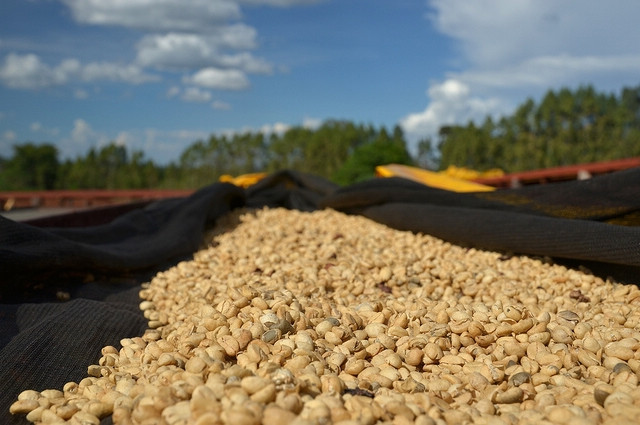
Royal Coffee processing Plant in St. Roman, a country grown in Central America, Tarazu, Costa Rica.
Costa Rican coffee cultivation was introduced by Cuba in 1779 and exported for the first time in 1820. There are about 32000 coffee farmers, with an average planting area of less than one hectare (10000 hectares) per farmer. Costa Rica has a population of 41 billion (2006), with a coffee planting area of 82500 hectares and an annual production of 1.7 million bags (60kgs per bag). The annual domestic consumption is 380000 bags.

Characteristics of coffee beans from three regions-Characteristics of coffee beans from Central and South America
Characteristics of coffee beans from three regions-Characteristics of coffee beans from Central and South America Arabica Arabica beans, world-famous blue mountain coffee, mocha coffee, etc., almost all Arabica species. Appearance: bean shape smaller, positive was long oval, narrow and tortuous cracks in the middle, beans back arc shape more flat, consistent size, uniform color luster. Origin: Arabica coffee

Costa Rica, the first country in Central America to grow coffee, grows youdao.
For more information on coffee beans, follow the Coffee Workshop (official Wechat account cafe_style), the first country in Central America to grow coffee; government support for development began in Costa Rica in 1729, when it was introduced from Cuba. This made Costa Rica the first country in Central America to grow coffee and the first to grow coffee because of its commercial value.

The secret of the long-term success of the St. Vincent processing plant in Honduras, the first largest coffee producer in Central America.
Professional barista exchanges please follow the coffee workshop (Wechat official account cafe_style) St. Vincent processing plant (Beneficio San Vicente) one of the ancient classic processing plants in Honduras St. Vincent (San Vicente) is a family-run processing plant, very famous locally, St. Vincent processing plant as the gatekeeper, to improve the quality of coffee beans! Provide technological upgrading for producers

Flavor and taste characteristics of Honduran coffee beans, the most popular coffee brand in Central and South America
What makes coffee in Honduras special? You know, there are countless excellent coffees in Central and South America. Why do Colombian coffee and Brazilian coffee stand out from the crowd? Let's take a look at the uniqueness of Honduran coffee on Qianjie today. The most luxuriant and purest coffee growing place in the region: unfortunately, the United States

Boutique coffee beans growing at Linna Manor in Nicaragua, one of the poorest countries in Central America.
Among them, in Costa Rica, where the government strictly controls the use of water, coffee farmers have created honey treatments named to retain different thicknesses of flesh, including yellow honey and red honey, the thinnest layers of flesh, and black honey, the famous owner of the former Costa Rican COE champion La Brumas de Zurqui. Traditionally, Nicaragua is

Madagerba Coffee Region Nicaragua Coffee Flavor Characteristics
Professional coffee knowledge exchange More coffee bean information Please pay attention to coffee workshop (Weixin Official Accounts cafe_style) Front Street-Nicaragua Coffee Introduction Central America is a land bridge connecting North and South America. There are seven countries, namely Belize, Costa Rica, El Salvador, Guatemala, Honduras, Nicaragua and Panama. Coffee is produced in seven Central American countries, including melons.

Stories about the characteristics of well-known Central American coffee producing areas
Well-known representative coffee: Tarrazu Costa Rica, like other Central American countries, widely grows Arabica coffee. Its coffee is mainly grown in two high areas, one is the high area near the capital San Jose, and the other is the Tarrazu mountains southeast of San Jose. Because coffee is grown in Costa Rica at high altitudes.

Boutique Coffee Bean Variety growing Market at Manor Lina, Nicaragua, one of the poorest countries in Central America
The excellent Nicaraguan coffee is among the highest in the world, it is mild and delicious, moderate granule, very fragrant. In many countries, coffee production has been seriously affected for political reasons. Nicaraguan coffee industry is no exception. The 1979 revolution forced coffee planters to flee to Miami. It was followed by a period of uncertainty, and the government considered whether to re-divide it.

History of fine coffee beans in Martinique, the birthplace of coffee beans in Central America
For professional baristas, follow the coffee workshop (Wechat official account cafe_style) Martinique, the cradle of American coffee. Martinique is a small island and the birthplace of Central American coffee, but it produces very little coffee today. The first coffee tree in the Western Hemisphere was created by Gabriel Mathieu de Clieu in the early 1820s.

Introduction to the History of Coffee in Martinique, the birthplace of Coffee in Central America
Professional baristas follow the coffee workshop (Wechat official account cafe_style) Martinique is a small island and the birthplace of coffee in Central America, but it produces very little coffee today. The first coffee tree in the Western Hemisphere was brought from France by Gabriel Mathieu de Clieu in the early 1820s. Good morning, Dirkley.
The only coffee without sharp acidity in Central America. Nicaraguan coffee.
Nicaragua (Nicaragua) aroma 3.5 minutes brightness 4 mellow flavor 4 points aftertaste 4 points suitable for baking: people who like deep-baked taste of City/Full city can try Jinotega and Matagalpa, baking the second burst when the beans are dense, the flavor is thick but well balanced, with a strong bitter sweetness

The birthplace of coffee in Martinique and Central America.
Martinique is a small island and the birthplace of coffee in Central America, but it produces very little coffee today. The first coffee tree in the Western Hemisphere was brought from France by Gabriel Mathieu de Clieu in the early 1820s. In his early years, Dirkley was a naval officer in Martinique. He brought back a coffee tree and planted it in Pritchell.
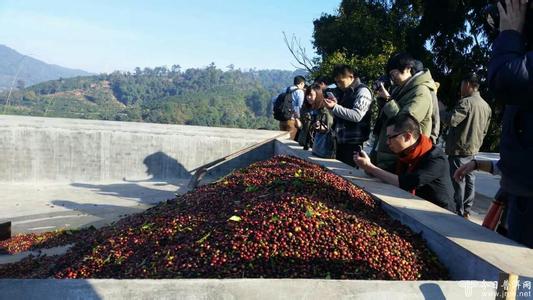
Coffee cultivation at Manor Lina, Nicaragua, one of the poorest countries in Central America
Nicaragua is an economically backward agricultural country, is one of the poorest countries in Central America, the unemployment rate is very high, people live in poverty, and coffee is Nicaragua's pillar industry, producing nearly 100,000 tons of coffee beans every year. Due to the poor economic foundation, the coffee industry is still relatively backward, and coffee farmers are also in a relatively poor state. Some of the fruits that stand out from the classifier will

Boutique coffee beans Central America Nicaraguan coffee beans
Nicaragua is located in central Central America, bordered by the Pacific Ocean to the west and the Caribbean Sea to the east. The highlands in the north and the coastal plains in the east are part of the Central American volcanic belt. The eastern plain is high-temperature and rainy, with a tropical maritime climate. The suitable climate provides an excellent growth environment for the cultivation of coffee. (Pakamara, Nicaragua on the left, Guatemala on the right) High-quality Niagara

Introduction to Honduran coffee beans located in northern Central America San Juan Cido San Barra Estate
Honduras is a mountainous country in Central and North America with a population of more than 8.3 million and an area of about 112,000 square kilometers. Located in northern Central America. It is bordered by the Caribbean Sea to the north, the Gulf of Fonseca in the Pacific Ocean to the south, Nicaragua and El Salvador to the east and south, and Guatemala to the west. More than three-quarters of the territory is mountainous and plateau. Mountains extend from west to east, inland for lava plateau, mountainous

Introduction to Panamanian Coffee, the King of Coffee Price ratio in Central America
Panama Coffee, the king of coffee price in Central America, has been among the best coffee producers in the world since three years ago, surprising countries that have been in the vanguard of developer production for many years. Panamanian coffee is mainly produced in the west near the Costa Rican border, producing the best washed coffee. Compared with coffee beans grown at low and middle elevations